
Expatriate Sylhetis Protest Remarks About Sylheti Language, Demand Apology
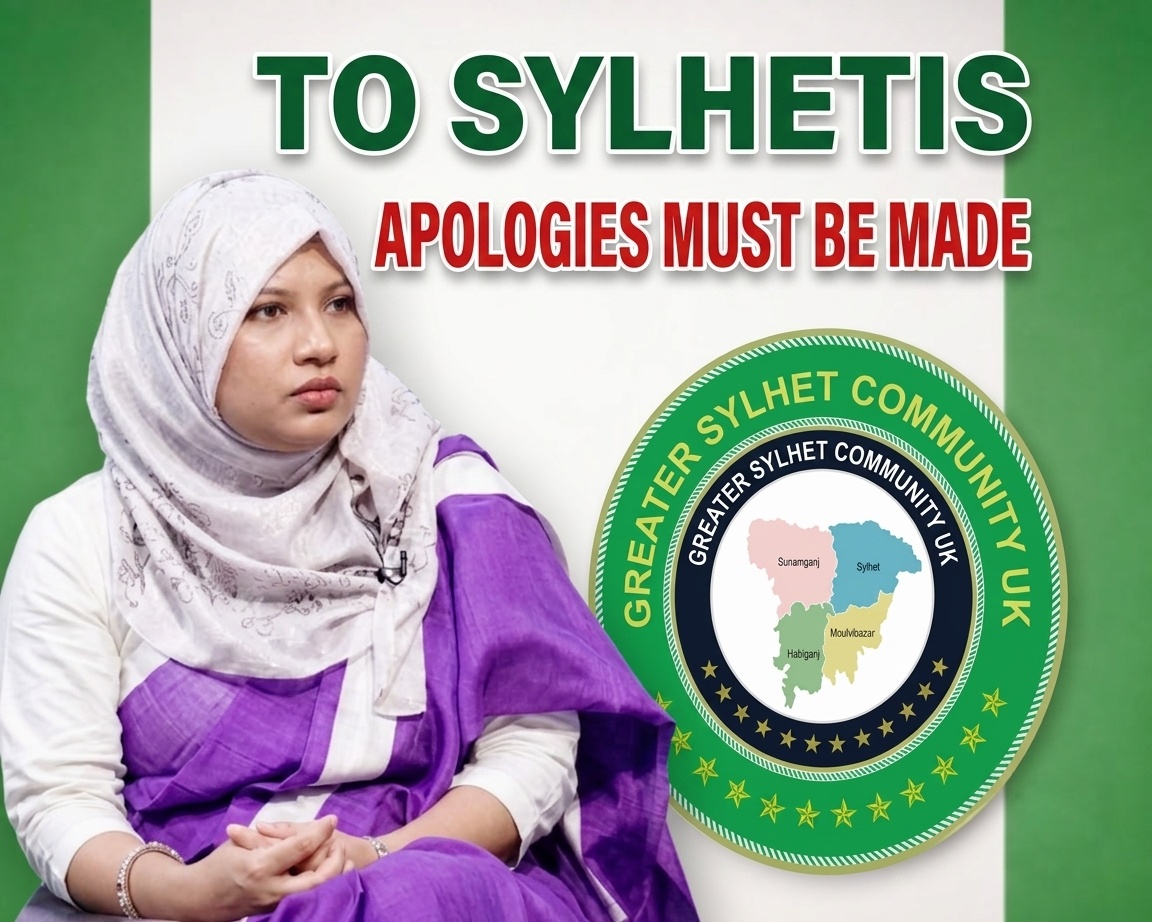 Leaders of the Greater Sylhet Community UK have strongly protested remarks made about the Sylheti language and Sylheti people during a television talk show, calling for the comments to be withdrawn and an apology to be issued to the Sylheti-speaking community.
In a joint statement, prominent leaders of the organisation—including patron and noted academic Dr Hasnat M Hossain MBE, patron and senior journalist KM Abu Taher Chowdhury, former chairperson and businessman Nurul Islam Mahbub, former secretary and Liberation War veteran Syed Abdul Qayyum Qaiser, central convener and community leader Mohammad Mokis Monsur, co-convener Alhaj Masud Ahmed, member secretary Dr Mujibur Rahman, finance secretary M Ashraf Mia, South East Regional Convener Harunur Rashid, co-convener Jamal Hossain and member secretary Tajul Islam, among others—expressed their strong condemnation.
According to the statement, Humayra Nur reportedly remarked during a television talk show that “Sylhetis cannot speak proper Bangla.” The community leaders said such a comment is disrespectful to Sylheti people living both in Bangladesh and abroad, particularly the large Sylheti community in the United Kingdom.
They called on Humayra Nur to withdraw the statement immediately and apologise to the people of Sylhet.
Central Convener of Greater Sylhet Community UK, UK BD TV Chairman, community leader and senior journalist Mohammad Mokis Monsur said language is a gift from Almighty Allah and that the world is home to thousands of languages, each with its own history and identity.
He stressed that Sylheti is not “incorrect Bangla.” According to him, the language has its own linguistic characteristics, vocabulary, pronunciation and rich cultural heritage.
He said the Sylhet region has a long and distinguished history of education, culture and intellectual development. He also highlighted the historical significance of the Sylheti Nagri script, which has been associated with the language and cultural heritage of the region for centuries.
Monsur further argued that Sylheti should not be dismissed as merely distorted Bangla. He described it as a language with its own linguistic identity, grammatical features, distinctive pronunciation and historical writing tradition, and said it remains an important part of the cultural and maternal identity of Sylheti people.
The community leaders emphasised that Bangladesh's regional languages represent the country's rich linguistic and cultural diversity. Rather than mocking or belittling any regional language, they said its history, heritage and contribution should be respected.
They also urged public figures and media personalities to exercise greater responsibility when making comments about languages, cultures and communities.
The Greater Sylhet Community UK leaders reiterated that Sylheti language, culture and the Sylheti Nagri script are matters of pride and identity for Sylhetis around the world, and called for respect, tolerance and recognition of linguistic diversity.
Syed Mujtaba Ali Road, Moulvibazar-3200
 প্রিন্ট করুন
 সেভ করুন