
Kashimpur Pump House Losing Effectiveness Amid Waterlogging in Moulvibazar
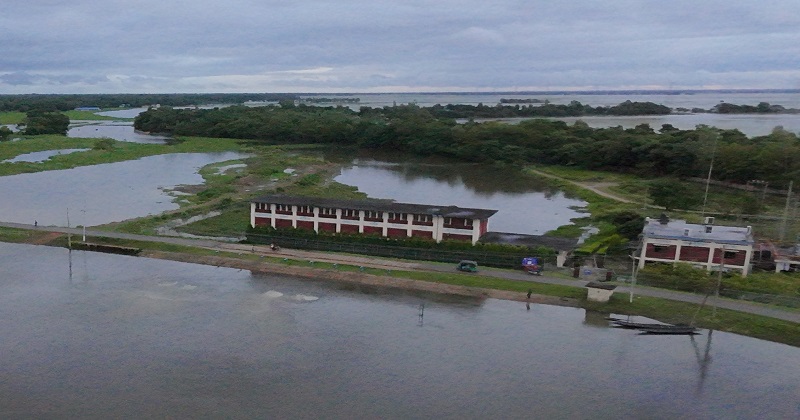
The Kashimpur Pump House, a key component of the Monu irrigation project, is reportedly struggling to drain water effectively, leaving large areas of the Kauadighi Haor in Moulvibazar’s Rajnagar and surrounding areas waterlogged.
Heavy rainfall and inadequate water pumping have caused water levels in the haor to rise, damaging Aman rice seedlings, fish farms and agricultural land. Hundreds of hectares of farmland are at risk of remaining uncultivated, while thousands of residents in several villages are facing serious difficulties.
Local farmers allege that the pump house has not been operated at full capacity or regularly enough to ensure timely drainage. They say they already suffered losses during the Boro season due to inadequate water management and are now facing another crisis during the Aman season.
Farmer S.M. Zaman of Shyamaijuri village said they were unable to harvest their Boro crop properly because of water management problems. He added that the waterlogging has now submerged Aman seedbeds, leaving farmers uncertain about how to proceed with cultivation.
Another farmer, Abu Taleb of Jumapur village, said new equipment had recently been installed at the pump house and the adjoining canal had been excavated to improve its capacity. However, farmers are yet to see the expected benefits.
According to the Bangladesh Water Development Board (BWDB), initiatives were taken in 1982 to protect agricultural production in Kauadighi Haor and control flooding. The project was designed to provide irrigation during the Boro season and quickly drain excess water during the monsoon.
However, continuous rainfall and upstream runoff have significantly increased water levels in the haor. Low-lying areas of Jagatpur, Jumapur, Kandigaon and Shyamaijuri in Moulvibazar Sadar, as well as several unions in Rajnagar, have been inundated.
Newly planted Aman seedlings have been damaged, while mature Aus rice on higher land has also been submerged. Several fish farms have reportedly suffered losses, and thousands of people from around 10 to 15 villages have been affected.
The waterlogging has also disrupted education. Roads leading to several schools have gone underwater, causing difficulties for students of around 8–10 government primary schools, one secondary school and two Dakhil madrasas.
BWDB Moulvibazar Executive Engineer Khaled Bin Walid said eight pumps at the Kashimpur Pump House cannot currently be operated simultaneously because of electricity and fuel shortages. Six pumps are being kept operational regularly.
He also said the water level of the nearby Kushiyara River remains high, preventing water from the haor from draining quickly. In addition, the 44-year-old pumps are no longer performing at their previous capacity.
Rajnagar Upazila Nirbahi Officer Bipul Sikdar said the pump house is being monitored regularly and water drainage operations are continuing despite the electricity shortage.
Farmers, however, are demanding that all pumps be operated at full capacity without further delay. They fear that if the waterlogging continues, thousands of farmers could face major financial losses during the current Aman season.
Syed Mujtaba Ali Road, Moulvibazar-3200
 প্রিন্ট করুন
 সেভ করুন