November 22, 2026, 6:23 pm


Bangladesh remained under the cover of prolonged fascism. After the violence of the logi-boitha attacks in 2006, the Awami League government, which came to power in 2008, gradually became increasingly reckless. By expanding Indian dominance, they began to govern in a fascist manner against patriotic citizens, journalists, civil servants, politicians, professionals, and people from all walks of life.
Targeting Bangladesh’s most capable military officers, patriotic Islamic leaders, and anti-hegemony leaders from various political parties, the government began eliminating them through different strategies, creating a leadership vacuum.
This government killed eleven top Jamaat leaders, including renowned Islamic scholar Allama Sayeedi, along with various BNP leaders. To carry out these killings through judicial means, the government established, at state expense, what was described as a gathering place for intoxication at Shahbagh. Although it was called a movement, Bangladesh’s Islamic scholars and patriotic leaders described it as a gathering place for intoxication. From that time onward, right-wing patriotic citizens and various student leaders also began to be marginalized in Bangladesh. It was at that time that a national newspaper published the lead headline: “The Echo of Fascism at Shahbagh”!

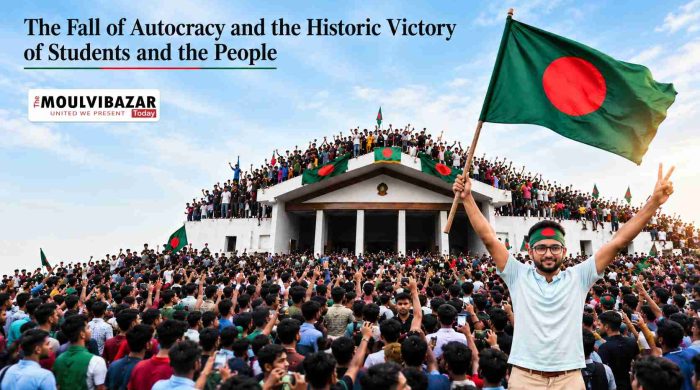
Photo: Mohammad Mubin Celebrating Historic Victory of Bangladesh in Barcelona, Spain. 5 August 2026.
Perhaps the people of Bangladesh could not realize it at that time. Even the political parties perhaps could not understand whether the rise of this fascism was truly possible.
Thereafter, political drama gradually began. After sidelining Jamaat, the Awami League government targeted the two major student organizations representing students—Jatiyatabadi Chhatra Dal and Islami Chhatra Shibir—following the enforced disappearance of BNP senior leader M. Ilias Ali. They also attempted to portray Shibir and Islamic parties as so-called militants to the Western world by labeling them as Islamic terrorists.
As the government, administration, and the absence of justice gradually cornered opposition organizations in the country, the government carried out a major tragedy in Bangladesh’s Qawmi community on 5 May 2013. At Shapla Chattar, they martyred hundreds of people and disappeared their bodies.
Thus began the Awami League’s undemocratic fascist rule of the country. For 17 consecutive years, there was virtually no form of oppression against opposition parties and dissenting opinions that the Awami League did not employ. They established every undemocratic practice in the country, including elections without votes, imposing a cursed rule upon the people. By unleashing a steamroller of repression on student organizations, they flooded Bangladesh’s campuses with blood.
Whether on campus or elsewhere, it was impossible not only to speak against the government but even to criticize it. The organization that played the greatest role in making the Awami League more fascist was its affiliated student wing, the Bangladesh Chhatra League. Because of the Chhatra League’s reign of terror, campuses were always engulfed in a frightening atmosphere.
Ordinary students could not even present their legitimate demands because of the Chhatra League. Any television channel or newspaper that criticized the Awami League or the government, or reported against them, could not survive.
When the state was overwhelmed by occupation, attacks, cases, and repression, then came the arrival of phoenixes. They perhaps took to the streets after swearing an oath upon the blood of their brother, martyr Abrar. Their vow was perhaps a response to the years of torture, repression, and killings of leaders and activists of political student organizations.
When the quota system, abolished in 2018 for government jobs, was reinstated by a High Court verdict on 5 June, the students’ movement began from that point. From 6 June onward, students stayed on campuses, submitted memorandums through various means, and repeatedly urged the government to take the issue seriously. However, the then fascist Awami League government paid no attention. During the 2024 anti-quota movement, the students named it the Anti-Discrimination Student Movement.
Gradually, as the movement moved beyond campus and onto the streets, they named the road blockades and street sit-ins Bangla Blockade. This Bangla Blockade spread across the country. The movement reached almost every university in the nation. However, surprisingly, the government’s police force and administration began treating these students in the same manner as they had regularly treated Chhatra Dal and Chhatra Shibir.
The students were compelled to strengthen their position and spread the movement throughout the country. Clashes broke out between the students and the ruling Chhatra League on various campuses. But this time there was no sign of retreat. The more attacks took place and the more injuries increased, the more the number of students on the streets grew. On 16 July, at Begum Rokeya University, police shot Abu Sayeed directly in the chest while he stood unarmed with his chest outstretched. On the same day, Chhatra Dal activist Wasim and Shibir activist Shanto were martyred in Chattogram. A coordinating committee of the Anti-Discrimination Student Movement was established across the country.
They participated in the streets alongside students solely with the demands of ordinary students. But no one was spared from the bullets of the police and Hasina’s armed forces.
From then onward, the movement gained momentum. Alongside the quota issue, demands arose for justice for those killed and injured. The resignation of the Home Minister and various police officials was demanded, along with calls for their trial.
Government repression on the streets intensified. All government forces united in an effort to suppress the students’ movement. Meanwhile, witnessing the government’s brutal crackdown on students across the country, resentment gradually spread among people of all political affiliations, laborers, and professionals. The movement slowly transformed into a mass uprising. The government, losing its direction, declared a state of emergency. By then, however, it was too late. The students stood before bullets with an unwavering determination to build a Bangladesh free from autocracy. Against bullets, bombs, and tear gas, they resisted with bricks, stones, and sticks. Due to the violence of the government’s loyal forces and the ruling Chhatra League and Jubo League, the death toll surpassed one thousand. The six central coordinators were taken into DB custody and forced to announce the withdrawal of the movement. Even then, the movement did not stop. It spread from Bangladesh to the entire world. Anti-Hasina protests began across Europe, America, the Middle East, and various countries of the subcontinent. Expatriate Bangladeshis began boycotting remittances.
Eventually, the government was forced to surrender and called for dialogue. But the students declared that there would be no dialogue with murderers. On 3 August, hundreds of thousands of people gathered at the Shaheed Minar. No child, elderly person, or youth remained absent. On that day, Nahid Islam, the chief coordinator of the Anti-Discrimination Student Movement, announced the One-Point Demand. From there came the liberation of the people of Bangladesh on 5 August. Students and the people overthrew the government. The fascist autocrat and killer Hasina fled to Delhi. As the public took control of Ganabhaban, celebrations erupted.
It was as though a new Bangladesh had emerged. At last, after removing the burden of seventeen long years, hundreds of young men and women and oppressed political leaders smiled in the breeze of freedom. The sound of victory echoed throughout Bangladesh. However, the expectation of ordinary people is that the students will not hesitate in rebuilding the country. May the spirit of July enable a new Bangladesh to once again stand tall with its head held high.
Author: Mohammad Mubin Khan
Acting Editor, The Moulvibazar Today